
CASE STUDY
Hampshire Self-Storage
Client: Hampshire Self-Storage
Industry: Self-Storage, Local & Regional
Company Size: Third-generation operator, 14 locations
Services: Brand Strategy, Website Redesign, SEO, Local Search, Paid Media, Call Tracking & Analytics
Engagement Type: Integrated digital marketing
Hampshire Self-Storage is a third-generation self-storage operator competing in one of the most price-driven, commoditized markets in local business. New senior leadership had been hired with a specific mandate: increase occupancy, improve lead quality, and support the launch of new and acquired locations. The digital infrastructure they inherited wasn’t built to support those goals.
Every Competitor Was Targeting the Same Audience the Same Way.
Nobody Had Noticed That Women Drive a Large Part of This Market.
What the Client Came In With
The paid media setup had no conversion tracking. Leads were coming in through phone calls but call tracking had never been implemented, so there was no way to know which channels were generating revenue and which were consuming budget without return. The brand and website reflected a generic industry look that made no attempt to differentiate in a market where most operators competed on price alone.
What the Assessment Revealed
The absence of call tracking was the critical gap. Without it, budget allocation was based on assumption rather than evidence. Establishing tracking first meant every subsequent decision could be grounded in actual performance data.
The brand opportunity surfaced through site visits to Hampshire locations and competitors. Most self-storage facilities and their marketing were not designed with women in mind, despite women representing a significant portion of the customer base. The category had overlooked them entirely. That was a differentiation opportunity nobody else was pursuing.
The Entire Category Was Ignoring a Large Part of Its Own Customer Base.
That’s a Positioning Problem.
What We Built
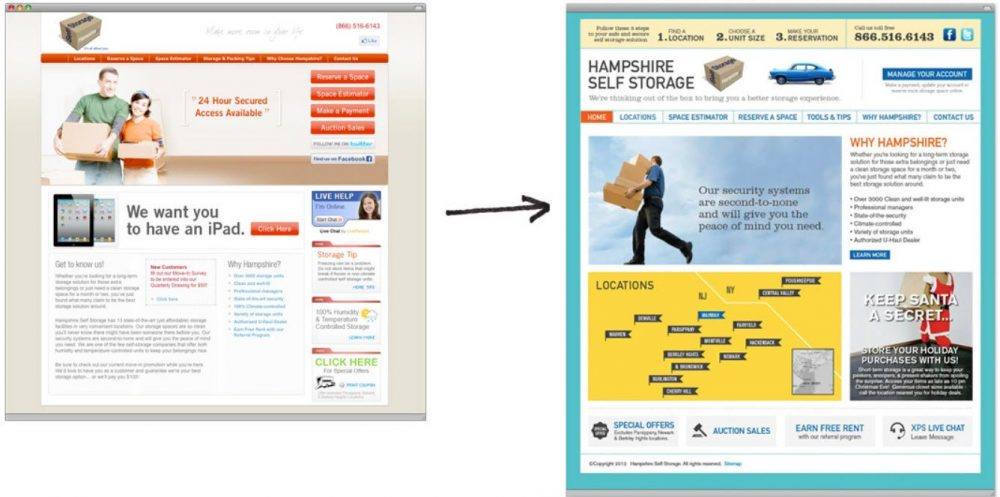
Call tracking was implemented across all 14 locations immediately, connecting phone leads to the channels generating them for the first time. A full website redesign repositioned the brand with a deliberate focus on a female audience, reflecting the market opportunity the competitive analysis had identified. SEO was built into the new site from the ground up. Local search profiles were optimized across Google, Bing, and Yelp for all locations. Paid media was restructured around the conversion data the new tracking infrastructure was now producing.
The Outcomes
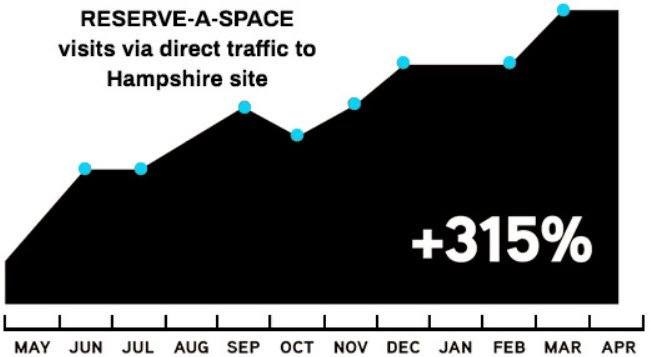
Within two months of launch, calls from the website increased 151%. Over the following year, monthly website visitors grew 71%, new visitor traffic increased 79%, and mobile traffic grew 63%. Revenue increased 30% and Net Operating Income increased 35%. Call tracking revealed that organic search was generating 36% of all calls, a finding that directly reshaped budget priorities across channels.
The engagement concluded when a major competitor acquired the entire Hampshire Self-Storage business.
The Business Performed So Well a Competitor Bought All 14 Locations.
Why It Worked
Two decisions made the difference. Establishing call tracking before optimizing anything else meant budget followed evidence rather than instinct. The brand repositioning toward a female audience owned a competitive position that nobody else in the category was claiming. In a market where everyone competed on price, Hampshire competed on relevance to an audience their competitors had ignored. The acquisition is the most direct measure of how well that worked.
Services involved in this engagement: