Your CRM Data Is Why ABM Campaigns Fail
You can’t target accounts accurately with duplicate records. You can’t build reliable workflow automations on inconsistent data. You can’t run sophisticated marketing campaigns when sales doesn’t trust the CRM.
Technical foundation isn’t glamorous work. But it’s the difference between automations that work and workflows that break constantly.
Why Technical Foundation Matters
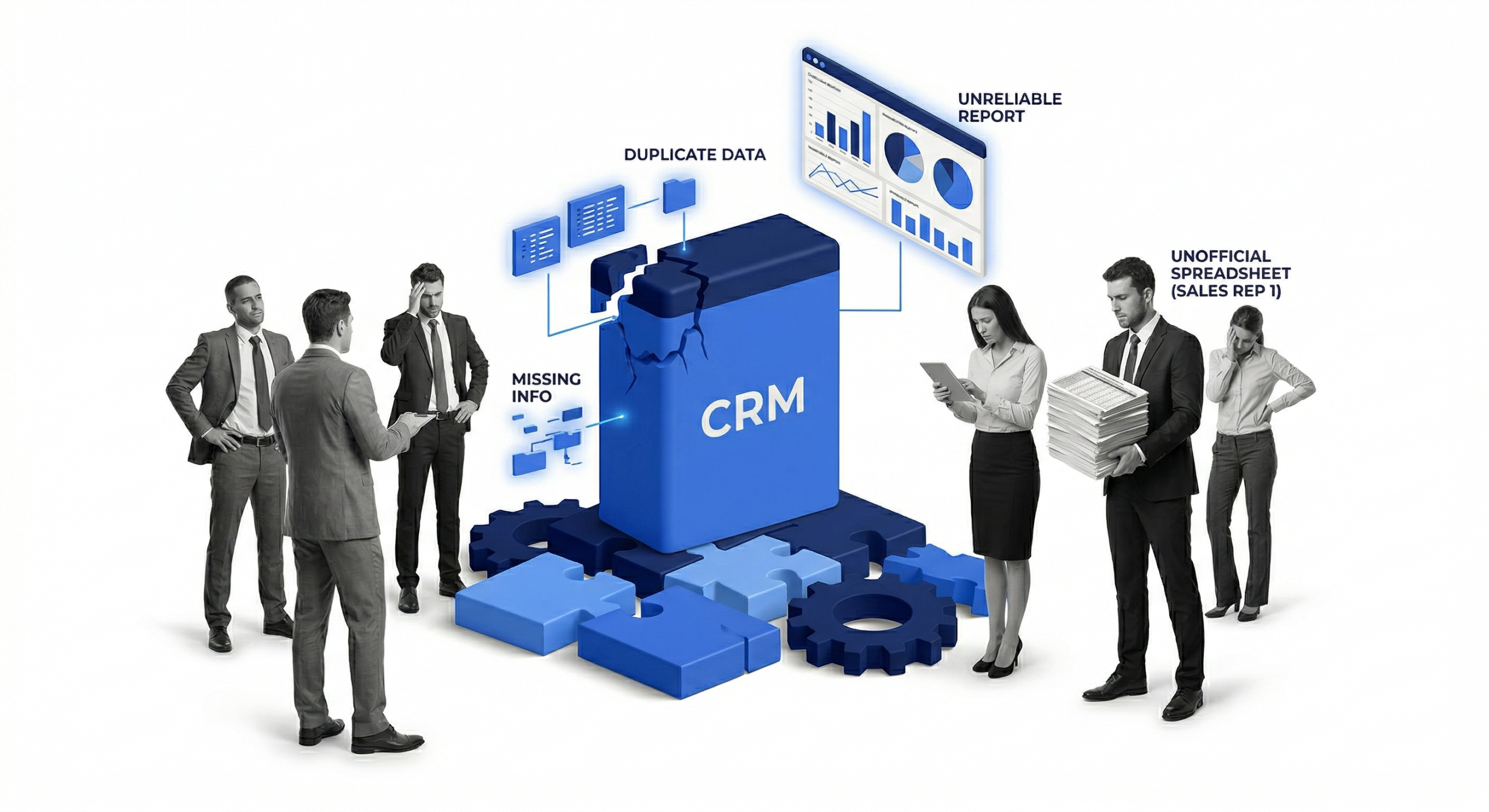
- You want to launch account-based marketing. But your CRM has duplicate account records, incomplete firmographic data, and broken contact-to-account associations. You can’t build accurate target account lists when the foundation data is broken.
- You want sophisticated workflow automation. But your workflows trigger incorrectly because data validation doesn’t exist.
- Automations break when someone changes a field format. Nobody documented why workflows were built the way they were.
- Your sales team maintains their own spreadsheets because they don’t trust CRM data. They ignore leads because contact information is incomplete. They update Salesforce after deals close—when accounting asks.
- Technical foundation work makes everything else possible. Clean data. Proper structure. Documented logic. Maintainable configurations.

Hubspot & Salesforce
We are platform agnostic, and we have done worked with ActiveCampaign, Pipedrive, Pardot to name just a few. And we are experts for HubSpot and Salesforce, arguably the two dominant CRM platforms for B2B companies running ABM programs and marketing automation.
HubSpot is built marketing-first. ABM tools are native. Workflow automation is intuitive. Implementation is typically faster and less expensive than Salesforce.
Salesforce is built sales-first with marketing add-ons (Pardot, Marketing Cloud). Highly customizable for complex ABM programs. More sophisticated automation capabilities but requires more technical expertise.
Both platforms require the same foundation work: Clean data. Proper governance. Documented configurations. Maintainable automations.
For comprehensive Salesforce-specific services:
Core Services
Data Foundation & Migration
Clean Data Enables ABM Targeting and Automation
You can’t build accurate ABM target account lists with three different records for the same company. You can’t score accounts when revenue data is missing for 40% of your database. You can’t coordinate buying committee outreach when contacts aren’t properly associated with accounts.

WHAT WE DO
Pre-migration cleanup – Account deduplication, contact consolidation, firmographic data enrichment, industry and revenue standardization.
Data governance framework – Required fields for account-based targeting, validation rules preventing bad data entry, picklists enabling automation, naming conventions for account hierarchies.
Migration execution – Field mapping, data transformation, account hierarchy preservation, post-migration verification.
ABM-specific foundation – Target account list structure, account scoring framework, buying committee identification, account engagement tracking.
WHEN YOU NEED THIS
Launching ABM program, migrating to HubSpot/Salesforce, existing data preventing automation accuracy, sales doesn’t trust account data.
ABM Campaign Configuration
Account-Based Marketing Requires Technical Precision
ABM isn’t just “marketing to accounts instead of leads.” It requires a thoughtfull and intentional CRM configuration. Different workflow logic.
WHAT WE DO
HubSpot ABM setup – Company scoring configuration, target account list management, account-based workflows, multi-contact engagement tracking, ABM reporting dashboards.
Salesforce ABM setup – Account scoring models, campaign influence at account level, role-based contact engagement, account hierarchy visualization, territory and account routing.
Account-based workflow design – Multi-contact nurture sequences, account engagement scoring, buying committee identification triggers, account hand-off automation.
WHEN YOU NEED THIS
You are launching ABM program, current ABM efforts not tracking properly, can’t measure account-level engagement, need to coordinate outreach across buying committee.
Workflow Automation Design & Build
Automations That Actually Work
Your simple time-based workflows don’t match buyer behavior. Your automations break when underlying data changes. Nobody documented why workflows exist. Workflows trigger incorrectly due to bad logic.
WHAT WE DO
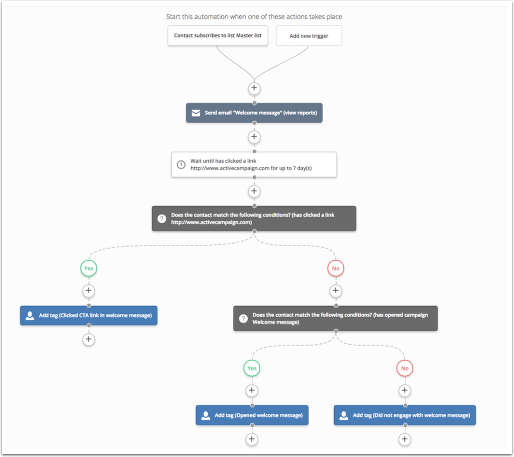
Behavior-based automation – Trigger logic based on actions not time, multi-step sequences with branching logic, re-engagement workflows, lifecycle stage automation.
HubSpot workflows – Complex branching and if/then logic, contact and company property-based triggers, integration with sales sequences, lead scoring automation, task creation for sales.
Salesforce automation – Record-triggered flows, screen flows for guided processes, campaign integration, territory and lead routing, approval processes.
Automation maintenance – Documentation of all workflow logic, testing protocols, monitoring for failures, regular audit and optimization.
Common use cases: Lead qualification and routing, account engagement nurture, sales notification based on behavior, data enrichment, customer onboarding sequences.
WHEN YOU NEED THIS
You have manual processes that should be automated, existing workflows break frequently, need sophisticated behavior-based nurture, scaling team needs consistent processes.
Clean Up Complexity Before It Breaks Everything
System Optimization & Technical Debt Reduction
Workflows break with every platform update. Nobody understands why certain automations exist. System performance is degrading. You’re afraid to change anything because you don’t know what it will break.

WHAT WE DO
Customization audit – Inventory all workflows, automations, custom properties. Document what each element does. Identify what’s unused or redundant. Assess what’s causing performance issues.
Simplification – Replace complex workflows with simpler alternatives. Consolidate duplicate automations. Remove unused custom properties. Optimize for platform best practices.
Documentation – Workflow logic documentation, integration architecture diagrams, maintenance runbooks, change management procedures.
Performance optimization – Identify slow-loading pages/reports, optimize workflow efficiency, reduce API usage, clean up unused data.
Platform-specific optimization:
- HubSpot: Workflow efficiency audit, custom property consolidation, database cleanup
- Salesforce: Apex code review, Flow efficiency improvements, custom object rationalization, governor limit management
WHEN YOU NEED THIS
Platform updates break things, original consultant is gone, system performance degrading, afraid to change anything.
How These Services Combine
Most companies want to jump straight to ABM campaigns and sophisticated workflow automation. It doesn’t work without proper foundation.
The typical sequence:
1.
Data Foundation
Clean and structure data for automation
2.
System Optimization
Remove complexity and technical debt
3.
ABM Configuration
Build account-based infrastructure
4.
Workflow Automation
Layer sophisticated automations on solid foundation
Why this order matters:
➜ You can’t target accounts accurately with duplicate data.
➜ You can’t build reliable automations on unstable foundation.
➜ You can’t scale if technical debt creates constant breakage.
CRM Connects To Your Entire Tech Stack
CRM technical foundation isn’t isolated work. Your CRM connects to marketing automation, advertising platforms, analytics tools, sales enablement systems, and ERP systems.
Clean CRM data flows to other systems. Workflow automations trigger cross-platform actions. Integration depends on foundation quality.
Common integrations: Marketing automation (Marketo, Pardot, HubSpot), advertising platforms (Google Ads, LinkedIn, Programmatic, OTT), analytics (Google Analytics, Tableau, Power BI), sales enablement support platforms ERP systems