
The Right Accounts. At Every Stage. Until the Conversation is Inevitable.
Account-based marketing isn’t a campaign type. It’s a coordinated system that builds familiarity, demonstrates expertise, and creates the conditions where sales outreach lands instead of getting ignored.
Mid-market B2B deals don’t close because a buyer saw one ad or read one article. They close because over weeks or months, your brand showed up consistently, demonstrated that it understands the problem, and gave the buying committee something worth their time. ABM is how you engineer that outcome deliberately, across specific accounts, rather than hoping inbound traffic eventually produces the right conversations.
We build ABM programs that combine targeted paid media, behavioral and contextual reach, and content designed to do the work sales can’t do alone.
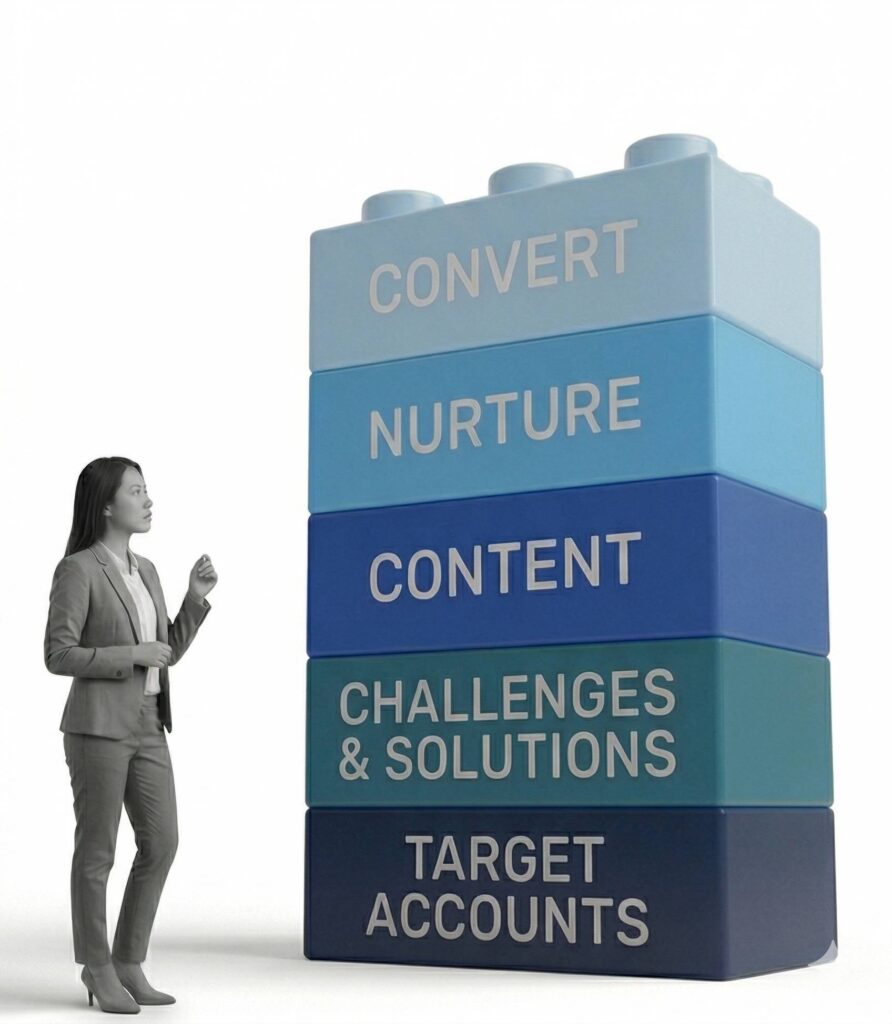
Most ABM Programs Are Just Retargeting With a Shorter Account List.
Generating Demand Inside Specific Accounts Requires a Different Logic Than Generating Leads at Scale.
Traditional demand generation casts wide. ABM inverts the model. You define the accounts worth pursuing, map the people inside them who influence the decision, and build a program that creates sustained visibility and relevance with that specific group.
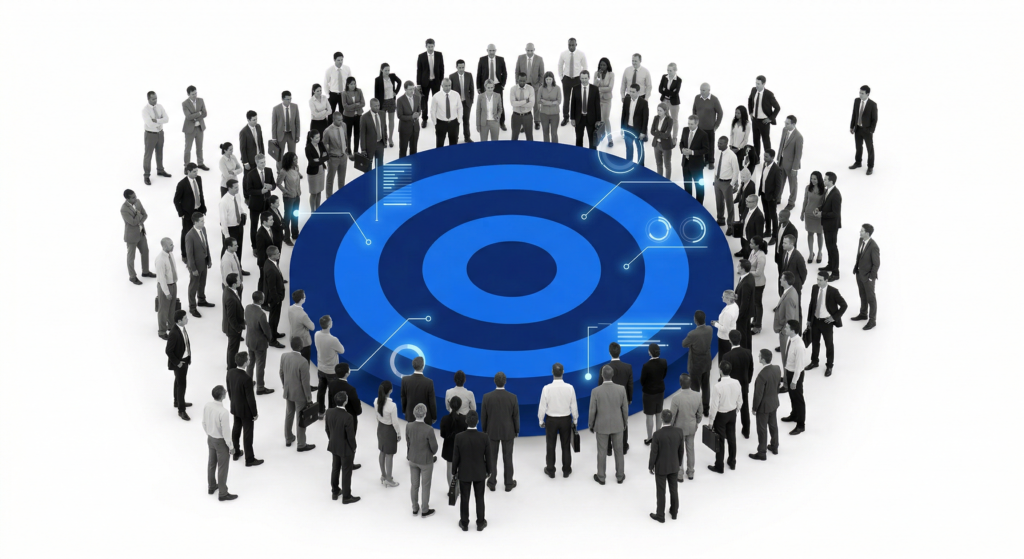
The failure mode for most ABM programs isn’t the media spend. It’s the account list. Accounts selected by company size and industry without qualifying for deal fit, sales cycle alignment, or actual buying readiness produce expensive impressions against the wrong people. Before paid media runs, the account selection has to be right.
We start with the accounts your sales team is already pursuing. That list exists in every organization, even if it lives in a spreadsheet or in a rep’s head. We work with sales to formalize it, pressure-test the criteria, and build the program around the accounts where a closed deal would actually move the business. The list shapes the program. The program creates the conditions for the conversation sales is already trying to have.
Impressions from Target Accounts Are Not the Same as Interest from Target Accounts.
Paid Media Built for the Buying Committee, Not Just the Decision Maker.
B2B purchasing decisions at mid-market companies involve multiple stakeholders. The person who feels the problem, the person who evaluates the solution, and the person who approves the budget are rarely the same individual. A program that reaches one of them at one account is leaving most of the buying committee untouched.
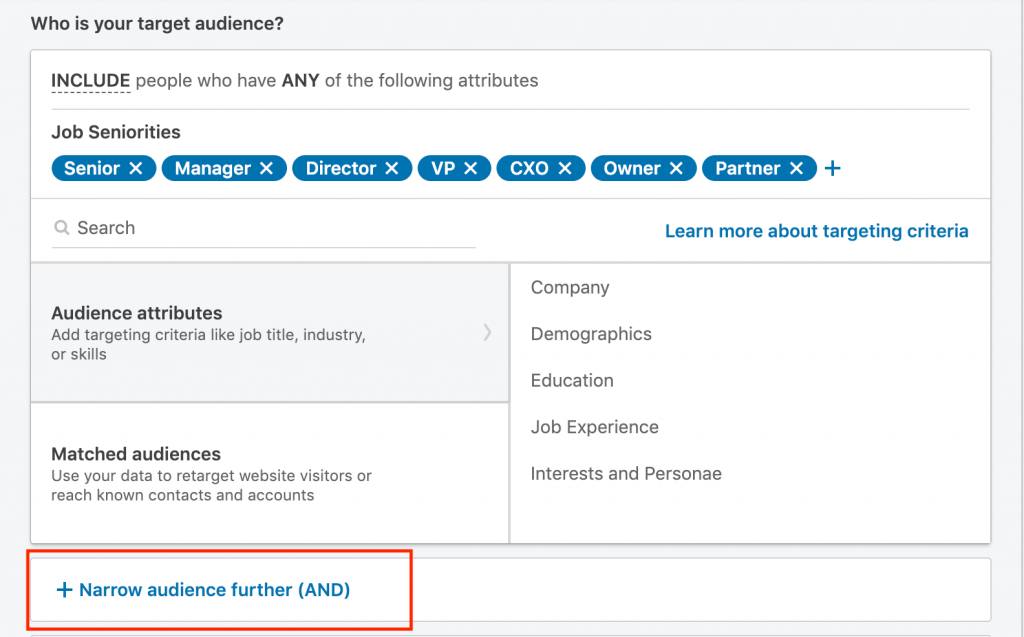
LinkedIn gives you named account targeting at the persona level. You can reach the specific titles, at the specific companies, with content matched to their role in the decision. It’s the most precise tool available for B2B account coverage and it’s where your buyers are already paying professional attention.
Programmatic campaigns extend that reach through contextual and behavioral targeting. Contextual places your brand alongside the content your target accounts are actively consuming. Behavioral targeting reaches buyers who have already demonstrated relevant intent signals across the web. Together they create full-funnel presence that follows the buying committee across the channels LinkedIn doesn’t own.
The two work together. LinkedIn builds direct account recognition. Programmatic maintains presence and reinforces the message everywhere else. An account that sees your content in their LinkedIn feed and then encounters it again through display and contextual channels doesn’t experience that as advertising. They experience it as relevance.
Paid Media Without Content Is Reach With Nothing to Say. Content Without Paid Media Is Expertise Nobody Finds.
Content That Builds the Case Before Sales Makes the Call.
This is the part of ABM most programs underinvest in, and where most of the actual deal-making happens.
When a sales rep reaches out to a cold account, the door is closed. When that same account has spent three months seeing content that names their exact problems, explains the underlying causes, and demonstrates that someone genuinely understands their situation, the door is open.
Not because of a clever outreach sequence. Because the content did the groundwork.
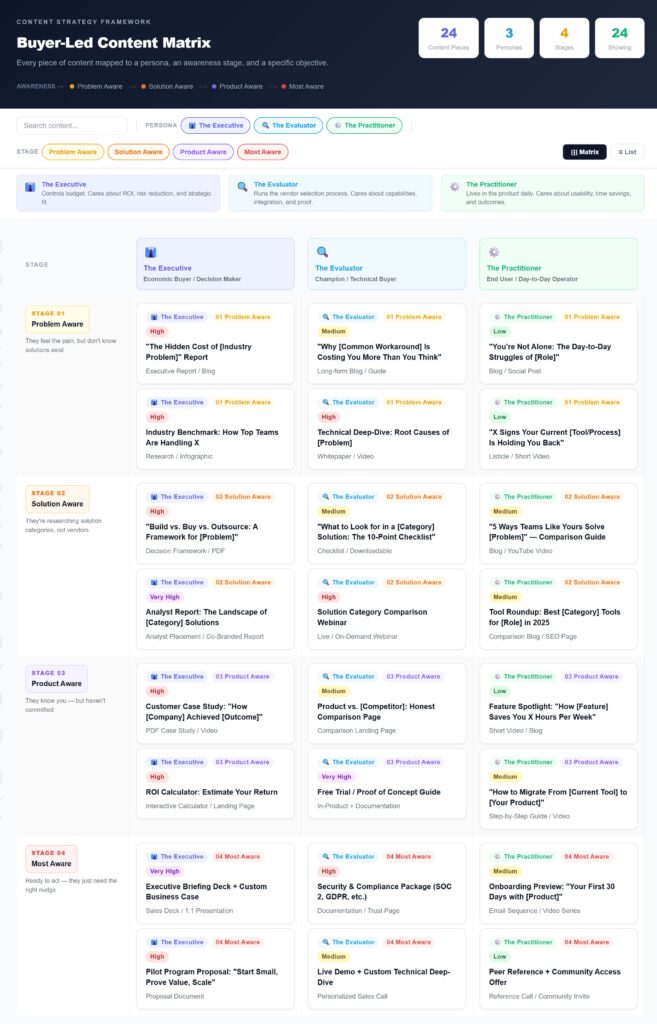
Content in an ABM program is not a blog calendar. It is a structured argument, delivered in stages, to a specific audience. It answers the questions your target accounts are already asking. It addresses the objections they haven’t voiced yet. It positions your approach as the logical answer to a problem they’ve already recognized.
That requires knowing your accounts well enough to write for them specifically. What keeps a VP of Marketing at a 200-person B2B software company up at night is not the same thing that concerns a Marketing Ops Director at a CPG firm. Generic content reaches everyone and moves nobody. Account-specific content, or content built for tight audience segments, is what creates the recognition that a sales rep can open a conversation with.
We develop content architecture mapped to buyer stage and account profile. Early-stage content that creates awareness of the problem’s real scope. Mid-stage content that builds credibility around your diagnostic approach. Late-stage content that reduces risk and makes the decision easier for the people who have to justify it internally.
By the Time Sales Reaches Out, the Account Should Already Know Your Name – that is the Job.
The Buying Journey for a Complex B2B Decision Is Long. The Program Needs to Match It.
A mid-market B2B sale with multiple stakeholders doesn’t happen in a single buying cycle. There is a period where the problem is felt but not yet prioritized. A period where options are being informally researched. A period where a shortlist forms. A period where internal consensus is being built. Each stage requires different content, different media tactics, and different signals to know when an account is progressing.
Most ABM programs are built for the end of that journey. They target accounts that are already in-market with conversion-focused content and wonder why engagement is low. The accounts that convert with the highest velocity are the ones that encountered the program earlier, absorbed the content over time, and arrived at the sales conversation already educated.
We map the journey for your specific buyer profile, identify the content and media requirements at each stage, and build a program that operates across the full cycle. Not just the bottom of it.
ABM Isn’t What You Do When Inbound Dries Up.
It’s How You Build Pipeline You Can Actually Forecast.
We Build the Account List, the Media Plan, and the Content Infrastructure Together. Not as Three Separate Projects.
The reason ABM programs underperform is rarely any single component. It’s the gaps between them. A well-defined account list with generic content. Strong LinkedIn campaigns pointing to a website that doesn’t continue the conversation. Content assets with no distribution strategy. Each piece exists but they don’t compound.
We start with a diagnostic of your current position. Which accounts are already showing intent signals. What content assets exist and what stage of the journey they serve. Where paid media is currently reaching and where the gaps are. What the sales team is hearing in early conversations that content and media aren’t addressing.
From that foundation we build a program where paid media, content, and sales outreach operate as one system. The content informs the media targeting. The media data informs which accounts to prioritize in outreach. Sales conversations feed back into content gaps.
That is what ABM is supposed to do. Most programs never get there because they were built in silos.