
CASE STUDY
Yale School of Management
Client: Yale School of Management
Industry: Higher Education, Executive MBA
Program: Executive MBA — $165,000 program targeting senior professionals globally
Services: Paid Media, Programmatic Display, International Search
Engagement Type: Integrated paid media management
Yale School of Management sought to grow its Executive MBA cohort from 30 to 90 students while diversifying the participant base across global markets. The program’s price point, selectivity, and audience requirements made this one of the more precise targeting challenges in higher education marketing. The addressable audience of qualified, senior-level professionals willing to invest $165,000 in an executive program is small by definition, and distributed across multiple continents.

Tripling Enrollment for a $165,000 Program. The Audience Was Global, Small, and Had to Be Found Precisely.
What the Client Came In With
Existing media activity was not generating the inquiry volume or applicant quality the program required. Yale needed a strategy that could reach senior executives and business owners across Africa, the Middle East, Asia, and South America, markets with very different media behaviors, within a single coordinated program. Fragmented channel management would make the budget inefficiency worse. Everything needed to be run by one account team with the flexibility to move spend across channels and geographies in real time.
What the Assessment Revealed
A multi-channel integrated approach combined international search targeting professionals actively researching top EMBA programs with programmatic display using contextual targeting on business, finance, and education publications and behavioral targeting of users recently engaging with MBA research content.
Centralized management meant budget could shift between channels, formats, and geographies based on live performance data rather than monthly reporting cycles. A small discretionary budget was reserved each month specifically for testing new inventory and formats. That systematic experimentation led to the discovery of a media pocket that was significantly underpriced relative to its conversion performance. Budget was reallocated heavily into that inventory and maintained there until performance normalized.
The Best Media Buy We Found Wasn’t in the Original Plan. It Was Found by Testing Something New Every Single Month.
The Outcomes
Over 28 months the program generated 6,200 qualified global inquiries. Cost-per-inquiry dropped 27% as optimization compounded across the engagement. Paid media was directly attributed to 23% of enrolled students. Yale exceeded its annual enrollment targets and successfully tripled cohort size while diversifying the participant pool across its target international markets.
The outcome that surprised the client most was not the volume but the quality. At a $165,000 price point with demanding admission requirements, converting inquiries to qualified applicants is where most campaigns fail. The applicant quality consistently met program standards, which is the result that ultimately matters for a program of this caliber.
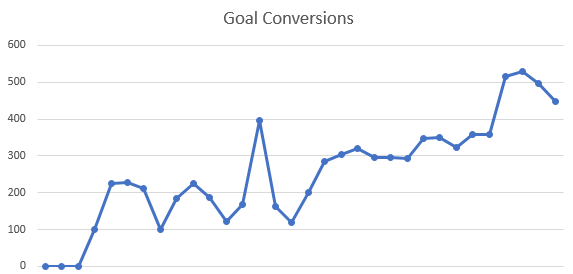
6,200 Inquiries. 27% Lower Cost-Per-Lead. 1 in 4 Students Came Through Paid Media.
Why It Worked
Single-team management across all channels and geographies was the structural decision that made everything else possible. Budget followed performance in real time rather than waiting for monthly reviews. The monthly testing protocol turned discretionary budget into a systematic discovery process rather than occasional experimentation. Finding undervalued inventory and moving quickly to capitalize on it before the market corrected is not something a fragmented multi-agency model can execute.