Your Email Marketing Is a Treadmill. Every Month You Run Harder Just to Stay in Place.
The newsletter deadline arrives. Someone scrambles to find a topic. Content gets written in two days. It goes out. Open rates are mediocre. Nobody follows up on who is engaged. Next month, the cycle repeats.
This isn’t email marketing. It’s a publishing obligation that exhausts your team and produces almost nothing in return.
For B2B companies running account-based marketing programs, the problem compounds. ABM requires consistent, strategic communication that differentiates your positioning and moves prospects through a defined journey. A monthly newsletter with no strategic thread isn’t nurturing anyone toward a decision. It’s noise.
Email done properly is a system; built once, running continuously, converting prospects over the 12-18 month timeline that B2B buying decisions actually take.

Why Monthly Newsletters Produce Mediocre Results and Exhausted Teams
Most companies arrive at email marketing the same way. Someone decides a newsletter is a good idea. A template gets set up. The first few issues get written with care. Then the deadline pressure starts.
Topics get chosen based on what’s available, not what the audience needs. Content gets rushed. The strategic thread connecting each issue to a buyer journey disappears because there was never a buyer journey mapped in the first place. Sending becomes inconsistent. Engagement drops. Nobody investigates why because the next deadline is already approaching.
The fundamental problem isn’t execution. It’s structure.
A monthly newsletter puts your team on a content production treadmill with no destination. Every issue starts from zero. Every month the same panic. Every quarter the same mediocre results.
The alternative isn’t sending less. It’s building a system that runs without requiring a production sprint every thirty days.
The Best Email You Ever Send Is One You Wrote Once and Never Have to Write Again.
Strategy First. Content Second. Automation Third.
Effective email nurture starts with a precise understanding of who you’re talking to and what they need to hear at each stage of their buying journey. Not a general description of your target market, a specific profile of the person reading your email, the problem keeping them up at night, and the objections standing between them and a conversation with your sales team.
From that foundation, the content strategy builds a sequence with a defined persuasion arc. Demonstrate that you understand their frustration, not in abstract terms, but with the specific language of their actual experience. Prove you have a solution through insight, evidence, and demonstrated expertise, not claims. Then ask for the next step, at the right moment, in the right way, with the right offer for where they are in the journey.
This sequence doesn’t change month to month. It runs continuously. New subscribers enter at the beginning and move through it on their own timeline. Your team’s job shifts from constant content production to monitoring performance, refining what isn’t working, and occasionally updating what the market has made obsolete.
The B2B buying cycle rarely fits a monthly newsletter cadence. A prospect who downloads your lead magnet in January may not be ready to have a sales conversation until September. A nurture system keeps you present and credible across that entire timeline without requiring manual intervention every thirty days.
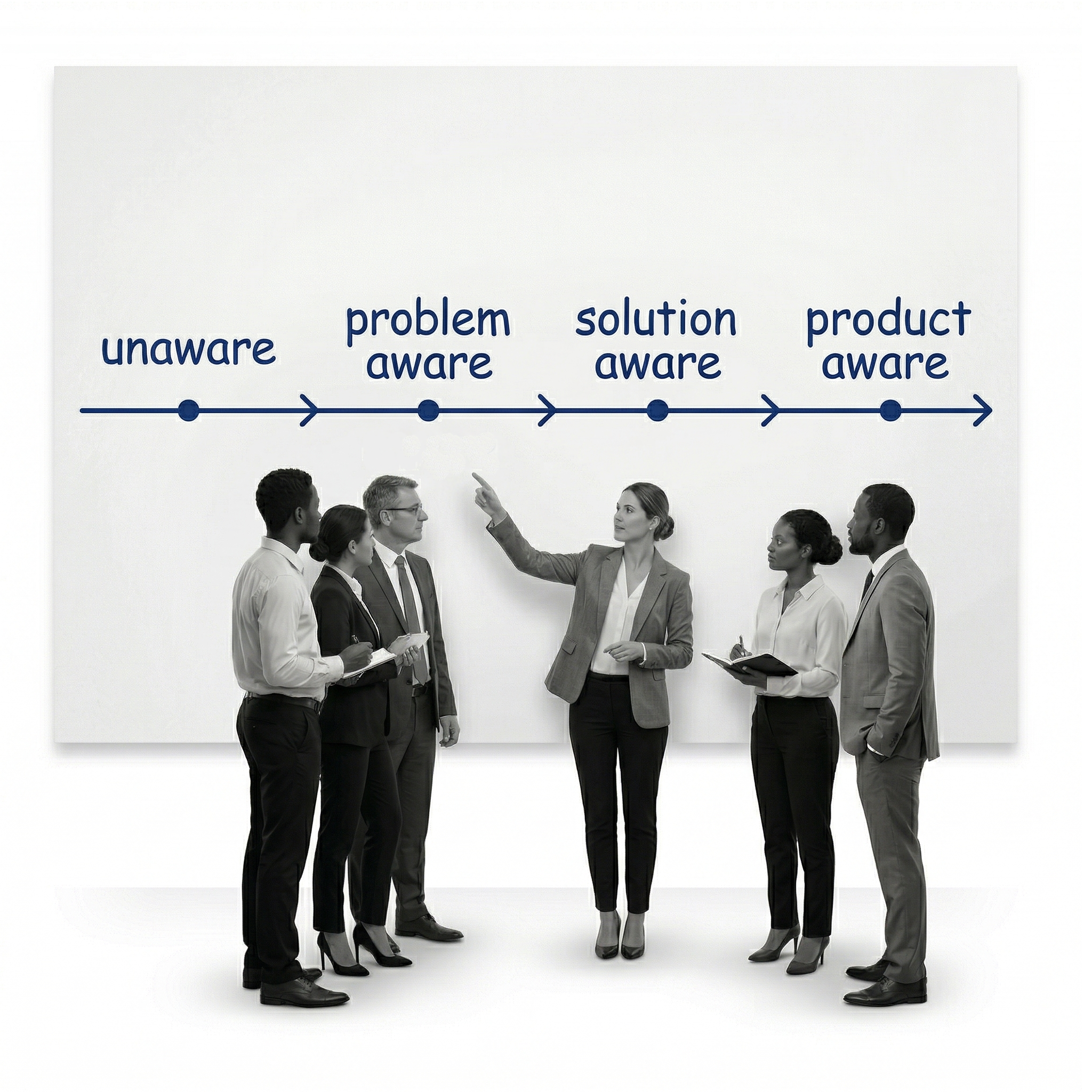
Most Email Campaigns Are Written for the Month. The Best Ones Are Written for the Journey.
One Sequence. One Lead Magnet. 40,000 Subscribers.
A professional services firm came to us with a common problem. Their email marketing was a monthly scramble. Open rates were declining. The team was exhausted. There was no strategic connection between what they were sending and what they were trying to sell.
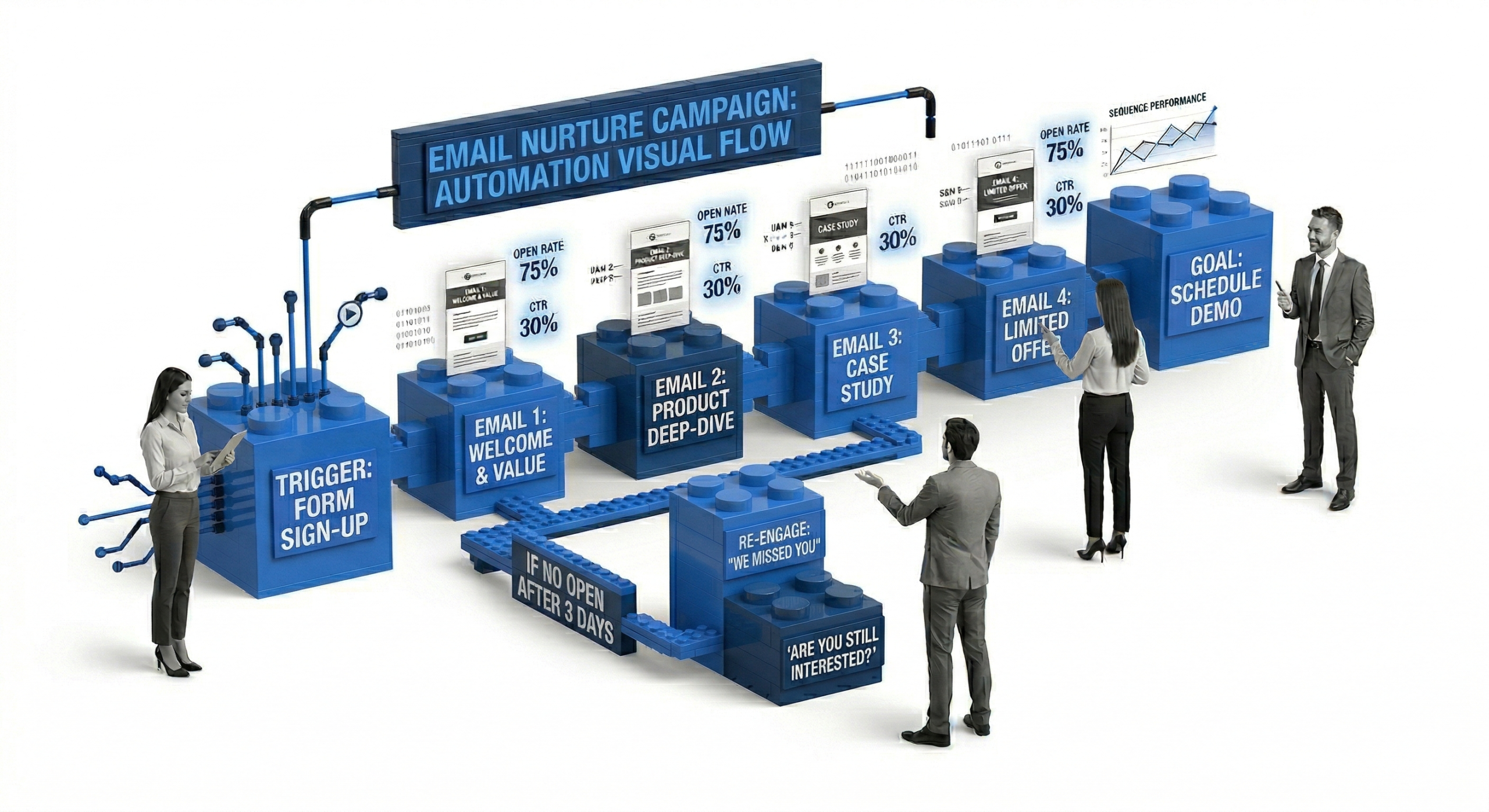
WHAT WE BUILT
We built a single evergreen nurture sequence anchored to one lead magnet; a piece of content that addressed the primary pain point of their ideal client precisely enough to attract the right audience and filter out the wrong one.
The sending cadence was designed around how B2B buying decisions actually develop. Higher frequency in the first six weeks – when a new subscriber’s attention and intent are highest. Gradually decreasing through months two through eight as the relationship builds and urgency varies. Re-accelerating around the twelve-month mark, when buying cycles that started at the beginning of the sequence reach decision points.
THE OUTCOMES
The sequence has run for over 10 years. The core content has barely changed. The list has grown to over 40,000 subscribers from that single lead magnet. Inbound inquiries arrive consistently from prospects who have been in the sequence for six, nine, and twelve months and more — moving at their own pace through a buying journey the sequence was designed to support.
This isn’t a case study about email volume or open rates. It’s a case study about building a system that works while your team focuses on everything else.
40,000 Subscribers. One Lead Magnet. The Sequence Hasn’t Changed in years, because it works.
Core Services
Email Strategy & ICP Mapping
You Can’t Nurture a Prospect You Haven’t Defined.
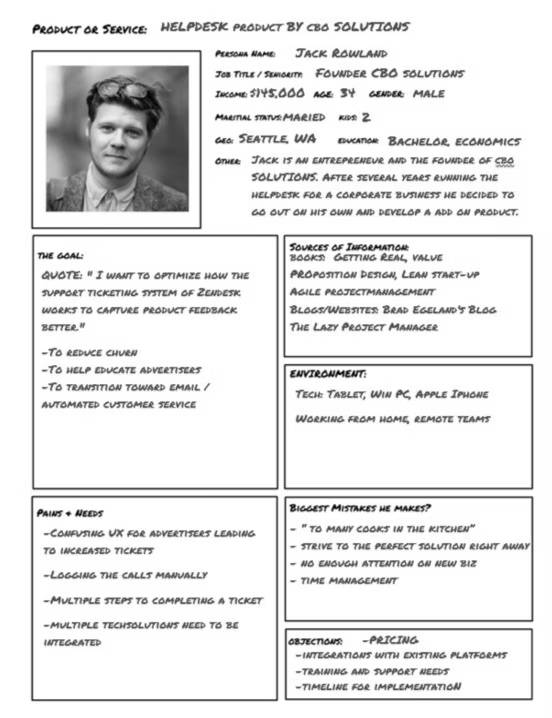
Generic email content produces generic results. If your email strategy isn’t built around a precise understanding of who you’re talking to, their role, their specific frustrations, the language they use to describe their problems, the objections they raise before buying, you’re sending content into a void and hoping something resonates.
We start every email engagement with ICP mapping that goes beyond demographics. We define the pain points at each buyer journey stage, map the objections that prevent progression, identify the proof points that build credibility with your specific audience, and build the persuasion arc that moves a cold subscriber toward a sales conversation over the timeline your buying cycle actually requires.
This strategy document becomes the foundation for every email in the sequence, ensuring there’s a coherent thread from first touch to conversion, not a collection of disconnected monthly topics.
Evergreen Sequence Development
Your Email Marketing Shouldn’t Require a Production Sprint Every Thirty Days.

We build evergreen nurture sequences designed to run continuously with minimal ongoing production; a library of content that moves subscribers through a defined buyer journey from first engagement to sales-ready, regardless of when they enter the sequence.
The sequence is structured around your buyer’s timeline, not your publishing calendar. Front-loaded engagement in the early weeks when intent is highest. Strategic content delivery through the middle stages as the relationship builds. Re-engagement triggers at the points when buying decisions typically crystallize.
Each email is written to stand alone and contribute to the sequence arc simultaneously. The content addresses real pain points with genuine insight, not promotional messaging dressed as education. Subscribers stay engaged because the content is worth reading, not because your brand name appears in their inbox regularly.
We also develop the lead magnet strategy that feeds the sequence, the entry point asset that attracts the right subscribers and filters the wrong ones before they ever enter your nurture system.
If Your Email Content Would Be Just as Relevant in 18 Months, You’ve Built Something Worth Building.
List Segmentation & Hygiene
A Dirty List Doesn’t Just Waste Budget. It Actively Damages Your Deliverability.
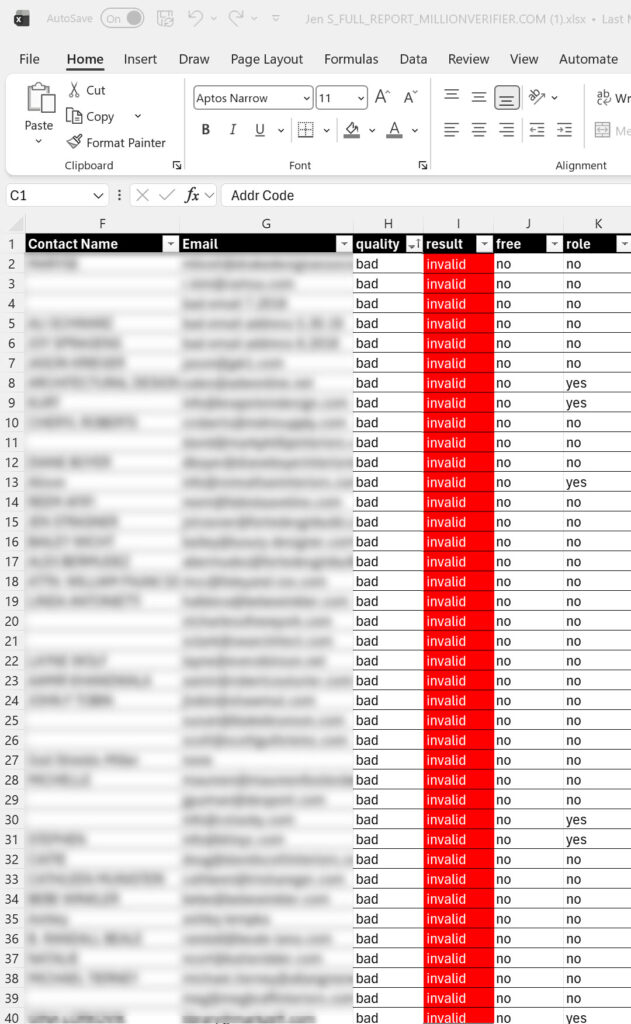
List size is the vanity metric of email marketing. What matters is list quality. Engaged subscribers who match your ICP, receiving content relevant to where they are in the buying journey, on a sending cadence that reflects their engagement patterns.
We build segmentation frameworks that separate your list by engagement level, buyer journey stage, firmographic characteristics, and behavioral signals, ensuring each subscriber receives content appropriate to their situation rather than the same broadcast to everyone.
List hygiene is maintained on a defined schedule. Unengaged subscribers go through a re-engagement sequence before removal. Hard bounces are cleaned immediately. Spam complaint rates are monitored. Sending reputation is protected.
The result is a smaller, healthier list that outperforms a larger, neglected one, and a sender reputation that ensures your emails actually reach inboxes rather than disappearing into spam folders.
CRM Integration & Engagement Follow-Up
Your Sales Team Has No Idea Who Just Read Your Last Three Emails and Visited Your Pricing Page.

Email engagement without CRM integration is marketing activity that sales never sees. A prospect who opens every email, clicks through to your services page, and downloads two pieces of content is displaying buying signals, but if those signals don’t flow to your CRM and trigger a sales follow-up, they’re invisible.
We connect email platform engagement data to your CRM so every meaningful subscriber action creates a visible signal for your sales team. Email opens, clicks, content downloads, and page visits flow to contact records in real time. Lead scores update based on engagement patterns. Sales tasks get created automatically when subscribers hit defined engagement thresholds. The handoff from marketing nurture to sales outreach happens systematically, not when someone happens to check a report.
Marketing nurtures. The CRM captures the signal. Sales follows up at exactly the right moment.
PLATFORM EXPERTISE

We Work With Your Platform. Not the One We Prefer.
Email platform selection depends on your existing stack, your team’s technical capability, and the sophistication of automation your strategy requires.
We work across HubSpot, Pardot, ActiveCampaign, Mailchimp, Constant Contact, and Klaviyo, among others, each with different strengths depending on your situation. HubSpot and Pardot make the most sense when your email strategy needs to sit tightly inside your CRM ecosystem. ActiveCampaign punches well above its price point for complex B2B nurture sequences. Mailchimp and Constant Contact work for simpler sending requirements. Klaviyo is purpose-built for ecommerce where purchase behavior drives everything.
We’ll tell you honestly if your current platform is limiting what your strategy requires, and what migration would actually involve before you commit to it.
The Platform Doesn’t Make the Strategy. The Strategy Makes the Platform Worth Having.
Email Doesn’t Work in Isolation. Neither Does Anything Else.
The content developed for your evergreen sequence feeds your SEO content strategy. The lead magnet that grows your list generates organic search traffic and paid media conversions. The engagement data flowing from email into your CRM informs lead scoring, sales outreach timing, and pipeline attribution.
Email marketing is the middle of the funnel. It converts awareness into consideration and consideration into sales conversations. Paid media and SEO fill the top. CRM and outbound sales cadence handle the bottom. None of these work as well independently as they do connected.
We build email strategy as part of an integrated system, not as a standalone channel that reports its own metrics in isolation.