Your Marketing Team Spends 15 Hours a Week on Tasks a Workflow Could Handle in 15 Minutes
Leads enter your CRM and sit there. Marketing manually qualifies each one. Sales doesn’t get notified when hot prospects engage. Email follow-ups require manual sending. Nobody has time for actual strategy because everyone’s buried in execution.
Marketing automation isn’t about sending more emails. It’s about eliminating manual work so your team focuses on growth, not busywork.

Manual Processes Don’t Scale
Platform Expertise
We’re platform-agnostic experts across major marketing automation platforms.
We work with what you have. Not what we wish you had.
HubSpot
Easiest to use, great for small-to-mid market, intuitive workflows that marketing teams can manage independently.

Pardot
Salesforce-native, strong for sales-marketing alignment, tight integration with Sales Cloud.

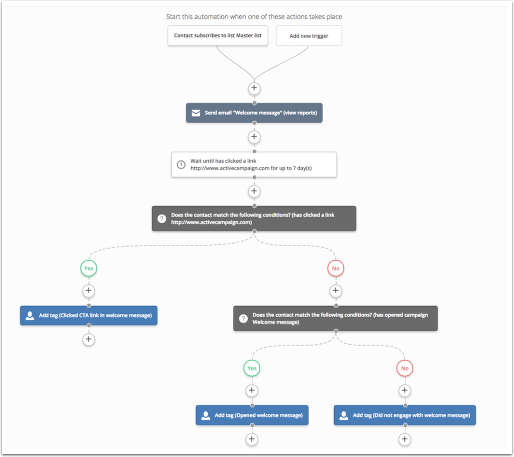
ActiveCampaign
Cost-effective, powerful automation for growing companies, surprisingly sophisticated for the price point.

Platforms differ in complexity and capabilities, but automation fundamentals remain the same: eliminate manual work, respond to behavior, coordinate marketing and sales, prove ROI through CRM attribution.
Core Services
Automated Lead Processing & Routing
New Leads Get Qualified and Routed Automatically
Leads enter your CRM and sit there because nobody automated what happens next. Marketing manually reviews each lead to determine if it’s qualified. Sales doesn’t know about hot prospects until days later. No consistent qualification process means handling varies by who’s working that day.
What We Do
Automated lead qualification – Lead scoring based on firmographics and behavior, automatic MQL identification, qualification workflows that run instantly when leads enter system, progressive profiling to gather data over time.
Intelligent routing – Territory-based assignment rules, product/industry-based routing, round-robin for inbound leads, VIP prospect escalation, routing based on lead score thresholds.
Sales notification automation – Real-time alerts when high-value prospects engage, task creation in CRM with context about lead source and behavior, email/SMS/Slack notifications based on urgency, digest emails for lower-priority leads.
CRM integration – Bi-directional sync between marketing automation and CRM, lead status updates flowing automatically, activity logging from marketing automation to CRM, opportunity creation triggered by qualification criteria.
When you need this
Leads sitting in CRM without follow-up, sales complaining about lead response time, manual lead qualification creating bottlenecks, inconsistent lead handling across team.
Behavior-Based Email Sequences
Email Nurture That Responds to What People Actually Do
Your time-based email sequences ignore buyer behavior. Everyone gets the same content regardless of engagement. Day 1: Email. Day 3: Email. Day 7: Email. No branching based on actions. No personalization beyond “Hi [First Name].”
What We Do
Behavior-triggered sequences – Emails triggered by specific actions (form submit, content download, pricing page visit), branching logic based on engagement (opened/didn’t open, clicked/didn’t click), different pathways for different buyer journey stages, sequences that pause when prospects engage with sales, re-engagement sequences for cold leads.
Personalized email automation – Dynamic content based on industry, role, company size, personalized send times based on engagement patterns, A/B testing automation for subject lines and content, progressive profiling questions embedded in emails, account-based personalization for ABM campaigns.
Multi-touch nurture programs – Welcome sequences for new subscribers, educational drip campaigns by topic, product-specific nurture tracks, event-based campaigns (webinar, trade show follow-up), customer onboarding and expansion sequences.
Performance optimization – Engagement metrics tracked in CRM, automatic sequence exit rules when goals are met, deliverability monitoring and list hygiene automation, conversion tracking from email to opportunity.
When you need this
Time-based sequences not converting, manually sending follow-up emails, can’t personalize at scale, need sophisticated nurture beyond simple drip campaigns.
Average Time from Lead Entry to Sales Contact: 4.7 Days.
Your Competitors Respond in 4.7 Minutes.
Sales Task Automation & Scheduling
Sales Gets the Right Tasks at the Right Time
Sales manually creates tasks for follow-up. Or doesn’t, and prospects get forgotten. No systematic approach to outreach timing. Hot leads don’t get prioritized automatically. Manual coordination between marketing touches and sales outreach means coordination doesn’t happen.
What We Do
Automatic task creation – Tasks generated when prospects hit engagement thresholds, context-rich tasks (what they downloaded, which pages they visited, engagement score), priority flagging based on lead score and account value, due dates calculated based on engagement recency, task assignment based on territory/account ownership.
Sales outreach scheduling – Coordinated cadences between marketing emails and sales touches, automatic scheduling of follow-up tasks after sales actions, multi-step sales sequences with built-in wait periods, calendar integration for meeting scheduling automation, reminder automation for upcoming tasks.
Marketing-sales handoff automation – Automatic notification when MQLs convert to SQLs, transfer of lead context from marketing automation to CRM, sales sequence enrollment triggered by qualification criteria, lead ownership assignment with handoff documentation, feedback loop when sales marks leads as unqualified.
Activity tracking and logging – All marketing touches logged to CRM timeline, email opens/clicks from sales sequences tracked, meeting scheduling tracked and attributed, call logging integration (if using tools like Outreach, SalesLoft), complete activity history visible to both teams.
When you need this
Sales missing follow-ups on hot prospects, manual task creation eating sales productivity, no coordination between marketing and sales touches, leads converting but sales doesn’t know why.
Your “Personalized” Outreach Changes the First Name.
Everything Else Is Identical.
Personalized Outreach Campaign Automation
1-to-1 Personalization at 1-to-Many Scale
Your generic mass emails get ignored. You can’t personalize at scale without automation. Your ABM campaigns require manual coordination across buying committee members. Personalization is limited to mail-merge fields that everyone recognizes as automated.
What We Do
Dynamic content personalization – Industry-specific messaging and case studies, role-based content (CFO vs CTO vs CMO messaging), company size segmentation (enterprise vs SMB approaches), geographic/regional personalization, product interest-based content variations.
Account-based outreach automation – Multi-contact campaigns at target accounts, coordinated messaging across buying committee members, account-level engagement tracking, buying committee identification and targeting, account-specific personalization (company name, recent news, industry trends).
Triggered campaigns – Website behavior-triggered outreach (pricing page visits, competitor comparison page views), intent signal-triggered campaigns (third-party intent data integration), milestone-triggered communications (contract renewal, usage thresholds), life event triggers (job changes, company announcements), engagement decay triggers (re-engagement campaigns).
Multi-channel coordination – Email + LinkedIn automation coordination, email + direct mail campaign automation, email + advertising retargeting synchronization, SMS integration for high-priority outreach, all channels tracked in single CRM record.
When you need this
Generic emails not working, need to personalize at scale, launching ABM program, multi-channel campaigns require too much manual coordination, can’t track personalized outreach effectiveness.
Complete Marketing Automation System
Why Integration Matters
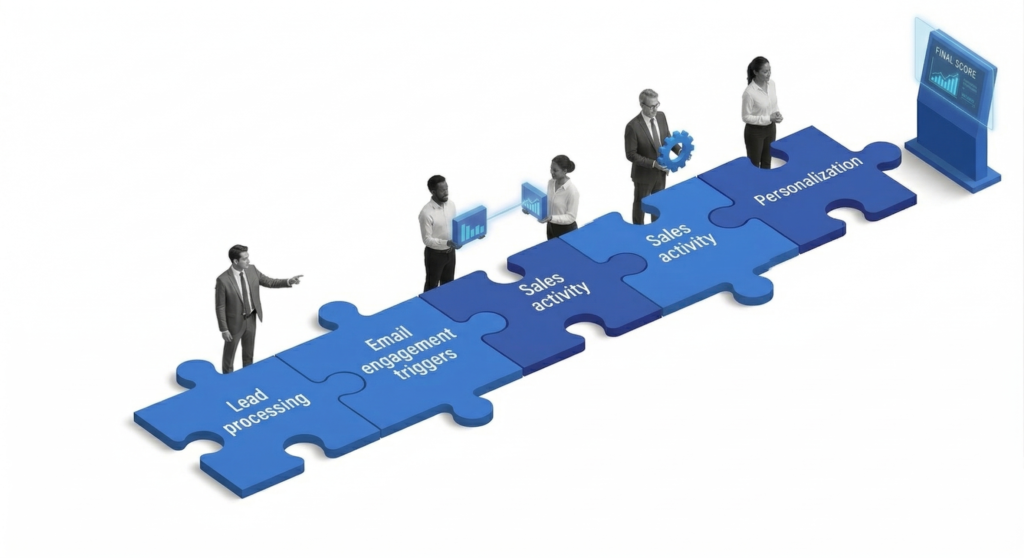
Each automation informs the others.
→ Lead processing informs email sequences.
→ Email engagement triggers sales tasks.
→ Sales activity updates lead scores.
→ Personalization uses data from all systems.
Everything tracked in CRM for complete attribution.
Without integration:
Marketing automation sends emails.
Sales works blind. Nobody knows what’s working.
With integration:
Marketing and sales coordinate automatically. Every touch is tracked.
Attribution is complete.
Automation Without CRM Integration Is Just Busywork
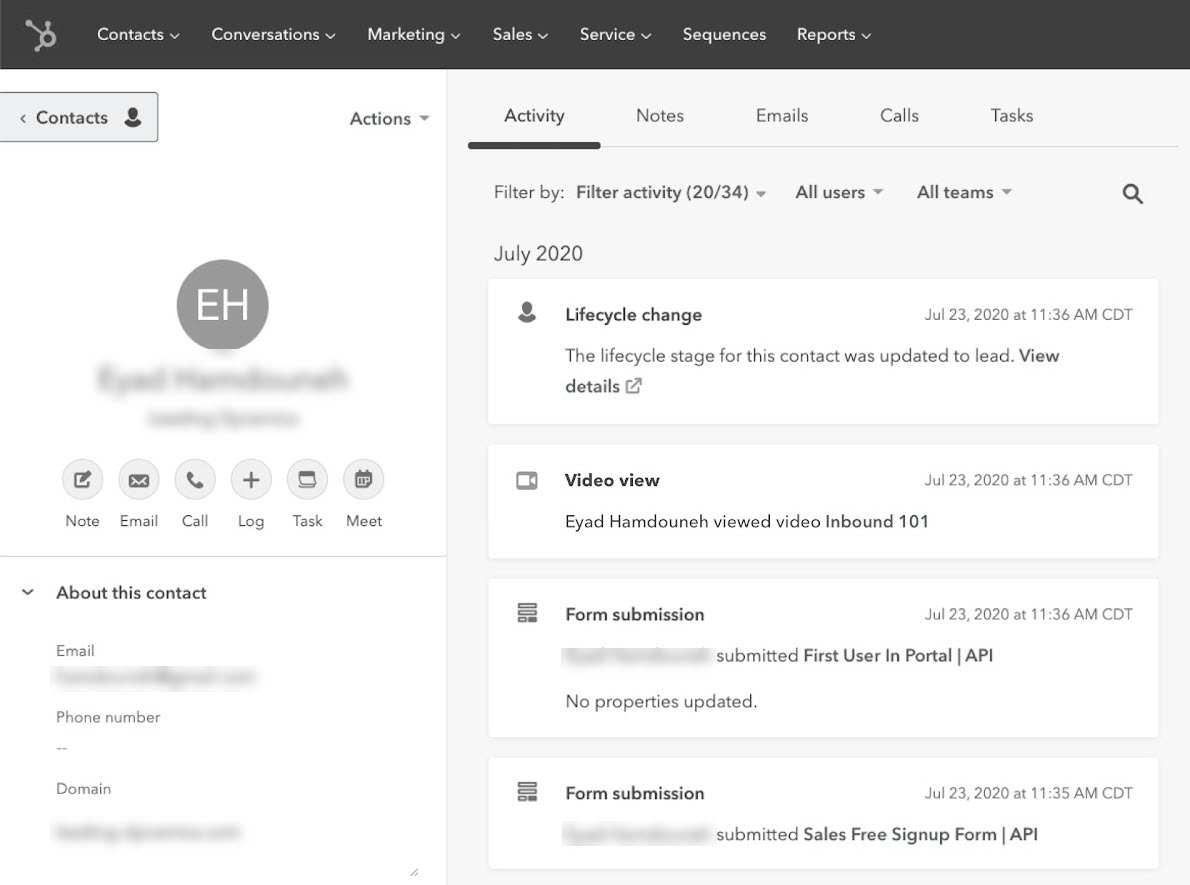
Marketing automation sends emails and scores leads. But if that activity doesn’t flow to your CRM, sales operates blind. They don’t see engagement history. They don’t get context about what prospects care about. They can’t prioritize effectively.
We build bi-directional integration so marketing automation and CRM work as one system.
The integration we build:
- Lead scoring updates flow to CRM in real-time
- Email engagement visible on CRM contact records
- Sales tasks created automatically based on marketing signals
- Opportunity influence tracked from marketing touches
- Complete attribution from first email to closed deal
Marketing sees what sales is doing. Sales sees what prospects engage with. Leadership sees which marketing investments drive revenue.
Who Needs Marketing Automation Services
- Marketing team manually qualifying and routing leads one by one
- Sales reps don’t get notified when hot prospects engage with content
- Email sequences don’t exist or require manual sending and tracking
- New leads sit in CRM for days without any follow-up action
- Can’t personalize outreach at scale beyond basic mail merge
- No coordination between marketing emails and sales touches
- Have marketing automation platform, but no strategy or proper configuration
- Manual processes preventing marketing and sales teams from scaling
WE AUTOMATE ON YOUR PLATFORM
Our automation strategies work across HubSpot, Marketo, Pardot, ActiveCampaign, and other platforms. We don’t push you toward our preferred platform—we build sophisticated automation on whatever you’re running.
Platform capabilities differ. HubSpot is easier to use but less customizable. Marketo is more powerful but requires more technical expertise. Pardot integrates tightly with Salesforce but has steeper learning curve. ActiveCampaign offers surprising power at lower price point.
But automation fundamentals remain consistent: eliminate manual work, respond to buyer behavior, coordinate marketing and sales activities, prove ROI through CRM attribution.
We match automation sophistication to your platform’s capabilities and your team’s technical skill level.